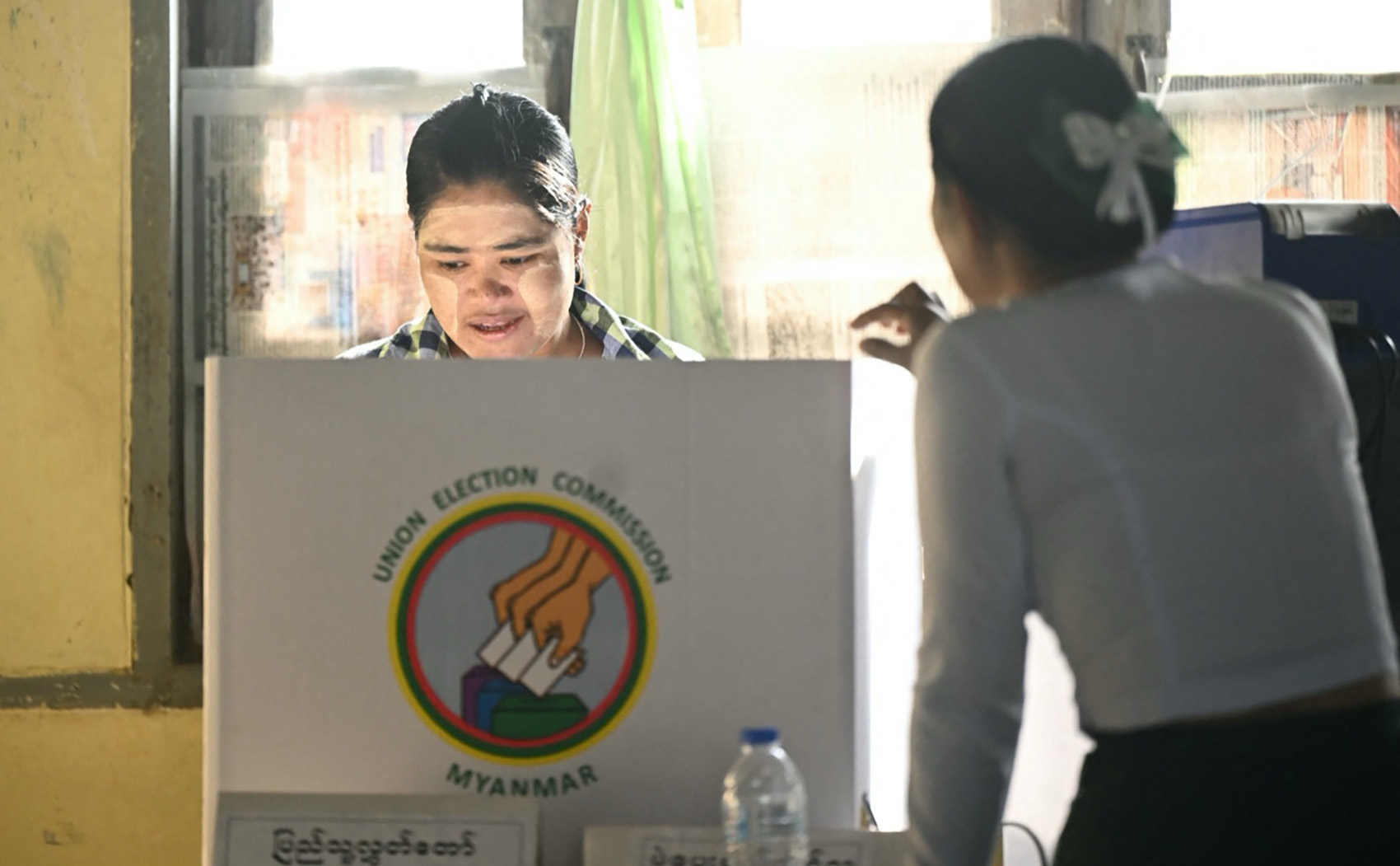
The Myanmar military held the second phase of its controversial election on Sunday in 100 townships nationwide in a bid to create a veneer of legitimacy for its continued rule, on a day marked by low voter turnout, resistance attacks, and reports of voters being intimidated into casting ballots amid tightened security.
The junta is holding the vote, which has been widely condemned as a sham both at home and abroad, in three phases. In the first phase, held in December, the junta-proxy Union Solidarity and Development Party won nearly 90 percent of votes. The third phase will be held on Jan. 25.
On Sunday, The Irrawaddy observed polling stations in Yangon’s Latha Township—known locally as “Chinatown”—and in Pabedan Township, home to many residents of Indian descent. Reporters visited around 14 polling stations from 6 a.m. onward and saw few voters.


Latha Township in downtown Yangon is the constituency of Daw Sandar Min, a former MP of the ousted National League for Democracy Party (NLD), now running as an independent after the junta dissolved the National Democratic Force, which she joined as a vice chair in August last year.
She told The Irrawaddy that the ongoing election was “starkly different” from the polls held under the previous civilian government, describing it as tense and subdued.
She said there are more than 17,000 eligible voters in her constituency but she expected only around 10,000 to turn out. Like Daw Sandar Min, representatives of other parties noted that voter participation has been far weaker than in past elections.
Daw Sandar Min added that in the first phase of voting last month, no independent candidates won seats, and she herself did not expect to win this time either.
At eight polling stations along 18th to 22nd streets, The Irrawaddy saw voters appearing in small groups. Most were middle-aged or older, appearing to be in their 50s, 60s and 70s. There were barely any young voters.
On Sunday morning, junta boss Min Aung Hlaing visited polling stations in Hlaing, Insein and Latha townships, including one at No. 1 Basic Education High School in Latha, where he once studied.
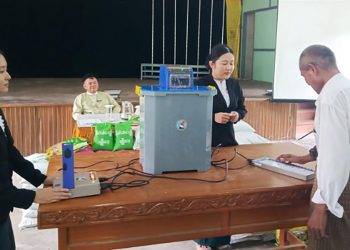
The Irrawaddy noted that many voters seemed unsure of how to cast their ballots. Near one station on Maung Khaing Street, The Irrawaddy overheard a man in his 60s instructing his wife to simply pick “A, B, C or D” when the green light appeared on the electronic voting machine. They appeared to be unaware that the names of the contesting parties were printed on the machine’s buttons.
A Pabedan resident expected high turnout in his township because most residents are business owners, and they fear their business would be targeted if they did not vote.
“Most of the people here are business owners, so they won’t want the regime to have a grudge against them. They will cast votes whether they believe in it or not,” he said.
In Pabedan Township, The Irrawaddy visited six polling stations on 28th, 29th and 31st streets. Party candidates were seen monitoring the process. Yet some voters expressed indifference. One woman resident said she did not vote and was unsure whether her family members had.
In Pazundaung Township, another woman resident said she boycotted the vote because she had no trust in the junta’s election. The Irrawaddy also spoke to a man who cast a vote for the People’s Party “out of sympathy.”
“There were few people when I went to the polling station in the morning. A few minutes ago, I heard a vehicle going around my ward and urging people to vote,” he said.
In video footage showing Min Aung Hlaing’s visit to one of the polling stations in Hlaing, he was seen asking people if they had voted; some replied that they had not yet done so because they were from other parts of the city scheduled for the third phase later this month. It was widely suspected that these individuals were bused to the station specifically for the senior general’s visit to create a false impression of a large voter turnout.
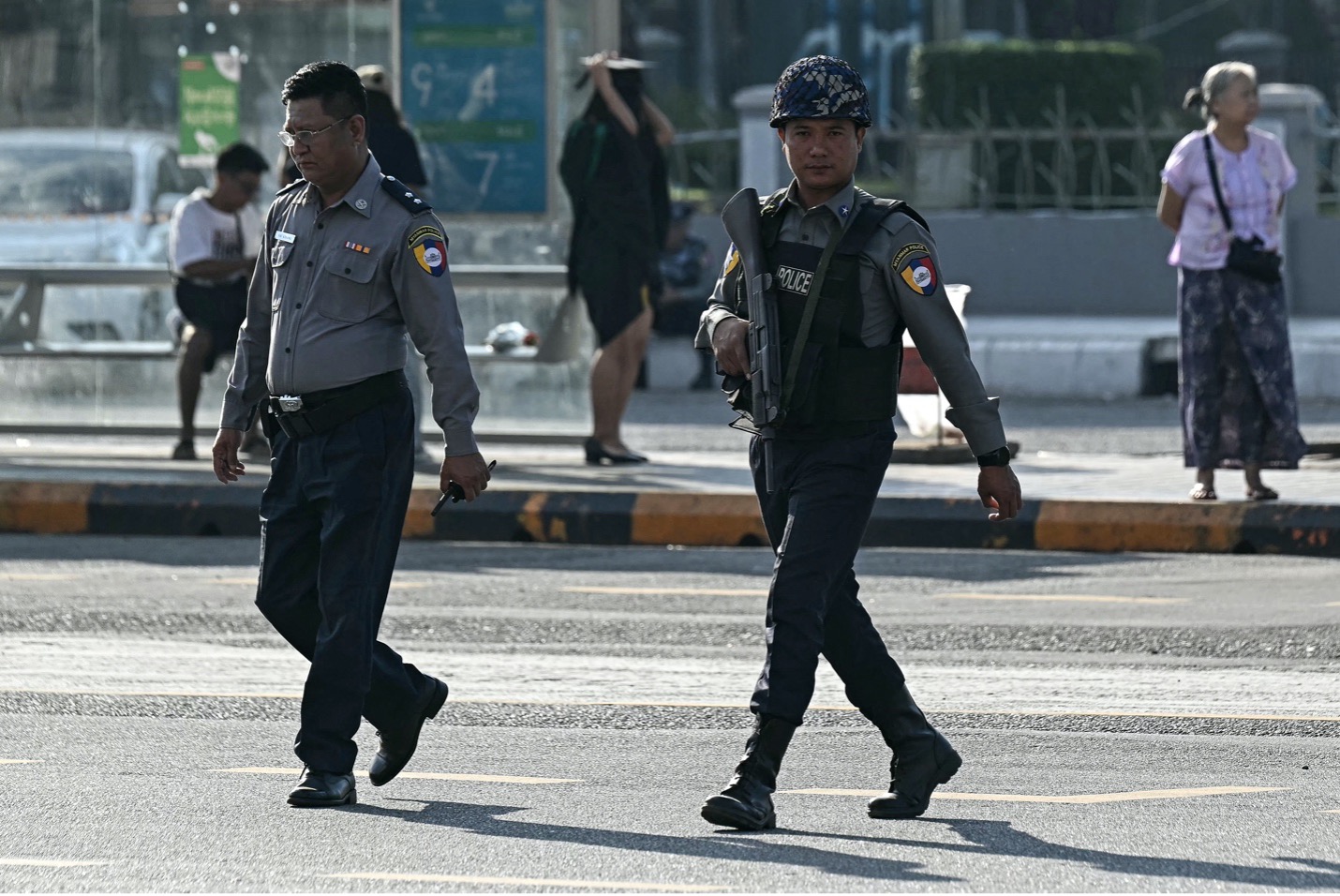
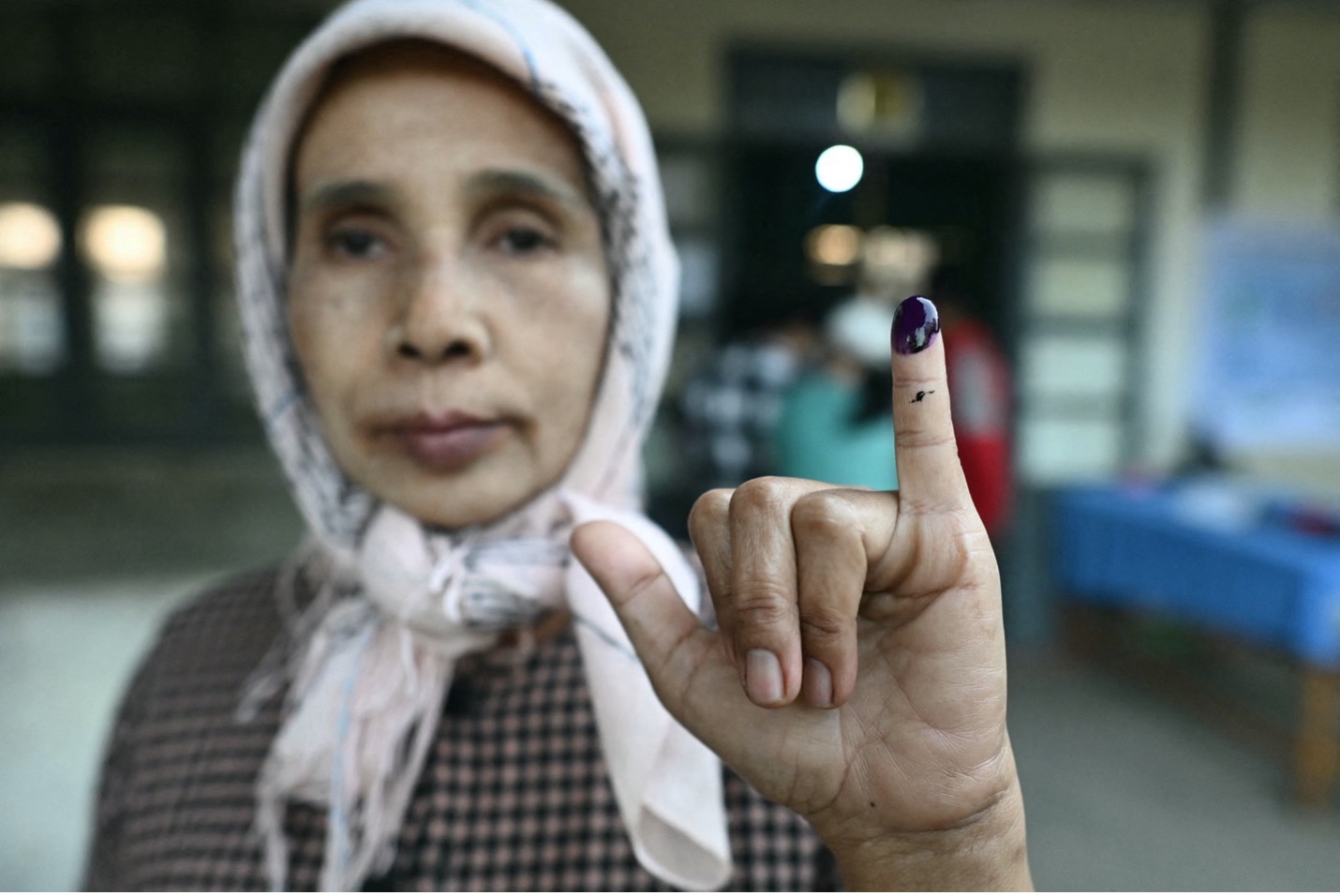
The Irrawaddy visited five polling stations in Hlaing including the one which Min Aung Hlaing visited early on Sunday morning. Security was tighter than the previous vote, with red-and-white barricade tape marking off the polling station premises and police and plainclothes officials guarding the stations. In one polling station opened at a school, the entire road was blocked. Most polling stations were empty. The Irrawaddy observed pedestrians nearby, and few had ink on their fingertips.
Turnout was expected to be high at a polling station set up near Yangon University’s Hlaing campus where the staff quarters of the Education Ministry staff are concentrated. The Irrawaddy saw a small crowd there in the morning but when The Irrawaddy visited there again by noon, the polling station was empty. In a nearby ward, The Irrawaddy saw an ambulance fitted with loudspeakers driving along the streets and urging people to vote. It was already 1 p.m.
The Irrawaddy observed at least 11 polling stations opened at schools and ward administration offices in Insein Township—where Min Aung Hlaing visited earlier in the morning—and found low voter turnout at all of them at around 6:30 a.m.
During the 2020 general election, long queues of voters were seen waiting for hours to cast their ballots. This time, however, there were no queues, with only a few people seen entering and leaving polling stations. The Irrawaddy also observed police vehicles guarding some polling stations and more armed police deployed near a road junction in the township.
A resident said that he was stopped, questioned and had his bags checked by soldiers when he was driving out early Sunday morning.
A female resident said, “Although we know the vote is a sham and who will win the election, we still voted because, as business owners, we are afraid of repercussions or being reported by regime informers if we boycott the vote.”
The Irrawaddy revisited the same polling stations in Insein at around 8 a.m. and 12 p.m. and found no change in the situation. At one polling station in the neighborhood Min Aung Hlaing visited, the road was blocked with bamboo barricades and chairs, and an ambulance, with a notice reading “only for voters.” In addition to police, motorbike taxi drivers, firefighters and charity workers were assigned to guard the polling station.
In Shwepyithar Township, The Irrawaddy observed about six polling stations, mostly opened at schools, at around 10 a.m. Sunday morning. It found that soldiers were deployed at road corners and along streets, while every polling station was guarded by armed police officers and pro-regime Pyu Saw Htee militia members. A similar scene was observed there, with no queues and only a small number of voters coming in and out of polling stations.
A taxi driver from Shwepyithar said the turnout was low and few people were interested. “I don’t want to vote. But the polling station is just opposite my house. So, I had to. But, whether I vote or not, the result is already predetermined, you know!”
He said he only saw around 20 people when he cast his vote around 7:30 a.m. The Irrawaddy also witnessed two military patrols, each consisting of two military vehicles, circling the township.
Elsewhere in the country, Sunday’s vote was marked by heavy security, complaints over advance ballots, and armed resistance.
In Kawhmu Township, 35 km from Yangon, People’s Party (PP) member Daw Su Su Nway told The Irrawaddy that the junta’s Union Election Commission (UEC) collected advance votes without notifying political parties. “They collected the advance votes by themselves,” she said. Only after her complaint did the UEC allow party representatives to observe the process in three villages.
Kawhmu has symbolic significance: It is where democracy leader Daw Aung San Suu Kyi contested and won seats in previous elections. This time, 88 Generation activist U Kyaw Kyaw Htwe is running there under the PP banner. As expected, the military’s proxy Union Solidarity and Development Party (USDP) received the bulk of advance votes, Daw Su Su Nway said, adding that a voting machine in Kha Rike Khani Village broke down six times during balloting.
In Yangon Region’s Cocokyun Township, the USDP secured all seats, delivering decisive wins for junta Prime Minister Nyo Saw and former deputy police chief Aung Naing Thu. Cocokyun has about 1,000 eligible voters—most of whom are civil servants and military personnel—with more than 370 advance ballots cast, almost all for the USDP. Voting there has now concluded.
The Coco Islands, 420 km southwest of Yangon between the Bay of Bengal and the Andaman Sea, host a naval base and carry a dark legacy. Under dictator Ne Win, political activists were once exiled and imprisoned there.
A junta election official was killed in a drone strike on a General Administration Department office in Htantabin Township, Bago Region, on Sunday morning, while polling continued across the area.
In nearby Pyu Township, People’s Defense Forces attacked a junta checkpoint on the old Yangon-Mandalay road, sparking clashes that forced residents to flee.
The UN Special Rapporteur on the human rights situation in Myanmar, Tom Andrews, on Thursday urged UN member states to reject the junta’s election, isolate the regime and pressure its leaders to cancel the remaining phases of voting.
Referring to the first round of the junta-organized election—which was marked by coercion, violence and exclusion, and resulted in a landslide victory for the junta’s proxy party—Andrews said, “By all measures, this is not a free, fair nor legitimate election. It is a theatrical performance that has exerted enormous pressure on the people of Myanmar to participate in what has been designed to dupe the international community.”
He added, “You cannot have a free, fair or credible election when thousands of political prisoners are behind bars, credible opposition parties have been dissolved, journalists are muzzled and fundamental freedoms are crushed.”